Introduction to VCC
VCC allows systems to be represented graphically and will then simulate them running on different hardware. The behaviour of a system is defined by creating a number of blocks, which communicate with each other using messages. Each block in the system contains code that acts on any messages that it receives.
The code can be written in either C or C++, but C must be used to accurately model the runtime of a system on a particular set of hardware. Messages that pass between blocks of code can be any of the standard datatypes or any user-defined type.
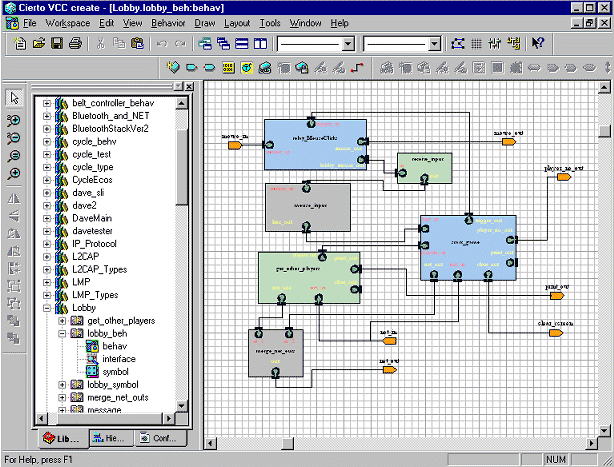
VCC main window
The VCC window consists of a library list on the left and a behaviour view on the right. Note that the behaviour is made up of blocks that are connected together with wires. This allows messages to pass between the blocks.
The rest of this introduction describes how to create and run a simple behaviour. It also looks at how to re-use behaviours and create complex datatypes.