


1 Using MLWorks interactively
1.11 Tracking down unhandled exceptions
This section gives a very brief introduction to the MLWorks stack browser. The stack browser appears whenever the compiled code causes an unhandled exception to be raised; it allows you to see the function calls on the stack at the point when the exception occurred.
Before using the stack browser, it is important to turn on debugging mode; this will ensure that the necessary debugging information is generated when code is compiled, so that it can later be passed to the stack browser. To turn on debugging mode, choose Usage > General Preferences > General from the menu. In the mode options dialog, check the Use debugger and Always use window debugger check boxes and click OK.
To invoke the stack browser, you need to raise an unhandled exception. Define and call the following less useful variation on the factorial function:
MLWorks> exception Fract;
exception Fract
MLWorks> fun fract 0 = raise Fract | fract n = n * fract (n-1);
val fract : int -> int = fn
MLWorks> fract 5;
On the call to fract 5, MLWorks enters the stack browser.
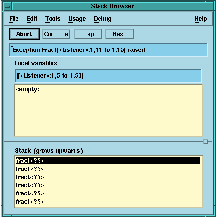
Figure 1.11 The MLWorks stack browser.
The box at the top contains an error message which tells you what exception was raised, and the bottom window contains a list of the function calls leading up to the unhandled exception. Selecting one of these with the mouse brings up information about that function call in the middle pane of the stack browser.
The Abort button closes the stack browser and returns control to the listener.
For more details of the stack browser, see Chapter 5, "Debugging".